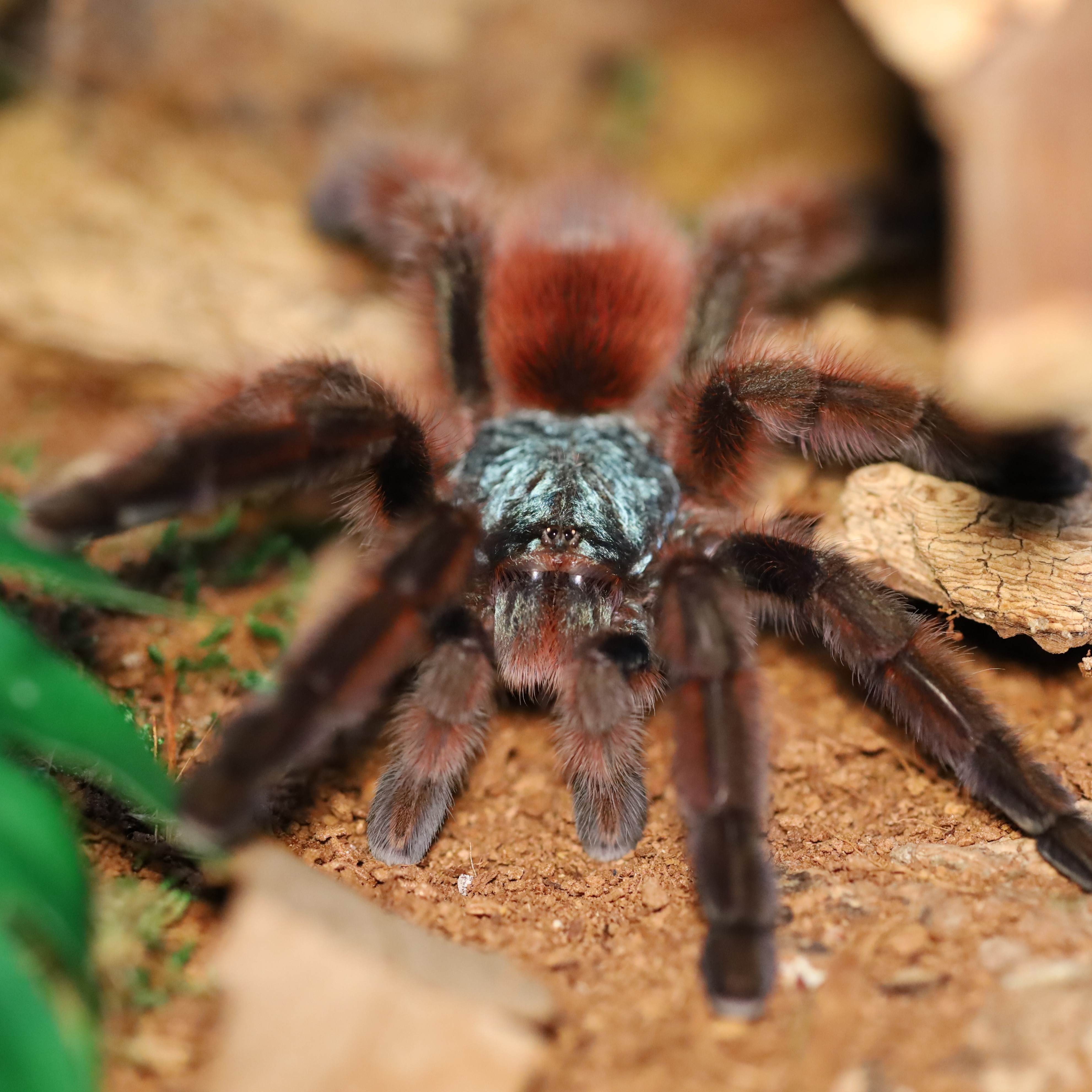
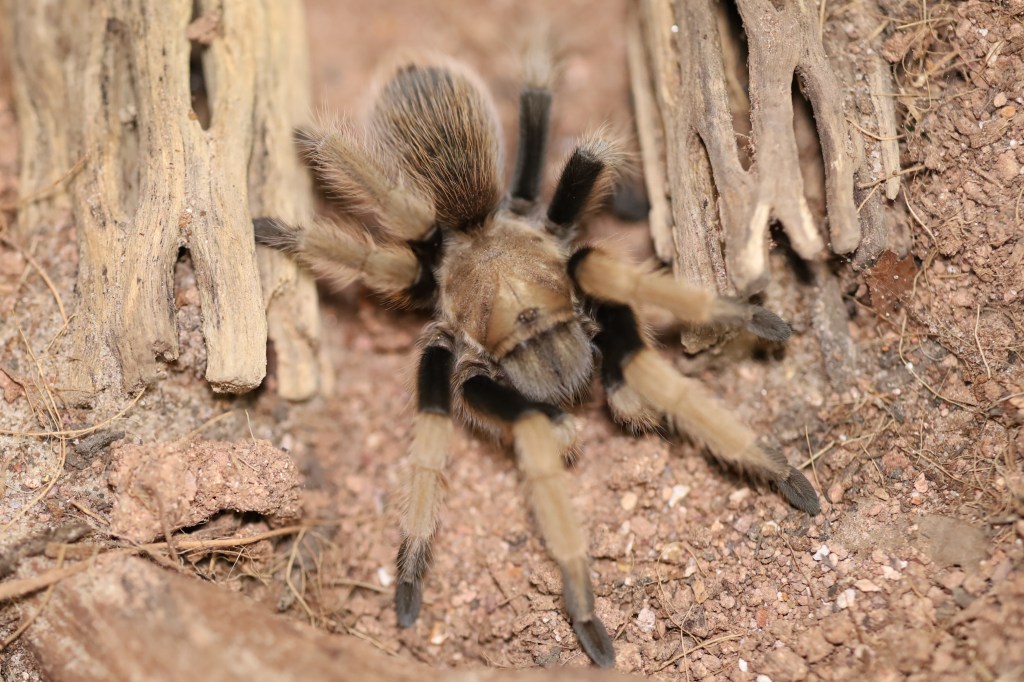
So, Spider Odyssey. What is it exactly, and why did I create it? The first part is simple enough. It is a space for documenting my experiences, exploring tarantula care and behavior in captivity, asking questions, seeking answers, and hopefully inspiring others to do the same. As for why I created it, that comes from the fascination they sparked in me and the questions I couldn’t find answers to.
When I first happened upon the tarantula hobby, I was coming from nearly twenty years of experience into keeping and raising a large variety of reptiles, amphibians, invertebrates, and small mammals. And yet, somehow, tarantulas had always remained entirely outside my focus until more recent years.
After acquiring my first two tarantulas (a juvenile Brachypelma hamorii and a Tliltocatl vagans sling) I was smitten. They were soon joined by a Caribena versicolor and Psalmopoeus cambridgei. And that was just the start. What started as two, and quickly became four, rapidly grew to fifteen within a year, and before long I found myself utterly enthralled by each new addition and neck deep in research material. I would lose myself for hours simply going through recorded footage and observing their individual behaviors. I was constantly asking myself “why?” in response to the things I saw.
What really fueled my fascination was the realization that for so many of my “why?” questions, there were simply no readily available answers. I couldn’t just ask a quick question online or crack open a textbook and locate what I needed. It got to the point where I was translating field reports into English in search of answers that I couldn’t find elsewhere.
I found myself in a peculiar situation of having the fascination and intrigue of an ethologist but searching for answers among hobbyists who had different reasons for keeping tarantulas than I. The trouble? Ethology largely focuses on the study of natural behavior rather than captive behavior, and tarantulas are a very understudied group. Meanwhile, hobbyists didn’t seem as interested in the types of questions I had. The lack of formal research, lack of study into behavioral variances between wild and captive specimens, and a pointed lack of interest in species-level exploration among general hobbyist groups left me with a lot of questions and not very many answers.
On the hobbyist side of things, much of the available care advice I found leaned toward simplified, generalized instructions, with little attention given to what separates each species from the next. Hundreds of tarantulas from all over the world were grouped into broad categories like arboreal, terrestrial, or fossorial. Little room was left to even consider the possibility of an “arboreal-by-day” that might descend to the forest floor to hunt at night, a “terrestrial” that prefers webbing up low-lying shrubs, or how seasonal shifts might influence whether a species leans more terrestrial or fossorial. I found that by oversimplifying so many different species, much of what makes them unique was being lost.
On the scientific side, there was little available on how wild behaviors carry over to captivity, and in which situations we should or shouldn’t try to replicate their natural environments. What is essential for survival in the wild, may serve no purpose in captivity and trying to replicate it in captivity can actually cause harm. Meanwhile, important elements of physiological development that may prove beneficial in captivity may remain completely unknown, where factors like seasonal cues are generally absent from care practices.
This should by no means be taken as a claim that tarantula care (or wild study) is being done wrong. They are simply different focuses, neither of which readily held the answers to the kinds of questions I was asking.
For me, keeping tarantulas has and continues to be a journey of discovery into their unique behaviors, adaptations, ecological roles, and how they are impacted by a captive environment. Documenting this journey and sharing what I have discovered (and continue to discover) along the way for others is why I created Spider Odyssey.
Furthermore, given the quantity of tarantula species in the hobby and their long lifespans, it is simply not realistic for a single person to truly explore every single species in great depth. I wanted to create a place that brings people together to share their personal experiences. A space where questioning is encouraged, and where differences in views leads to mutual exploration.
 Spider Odyssey
Leave a comment