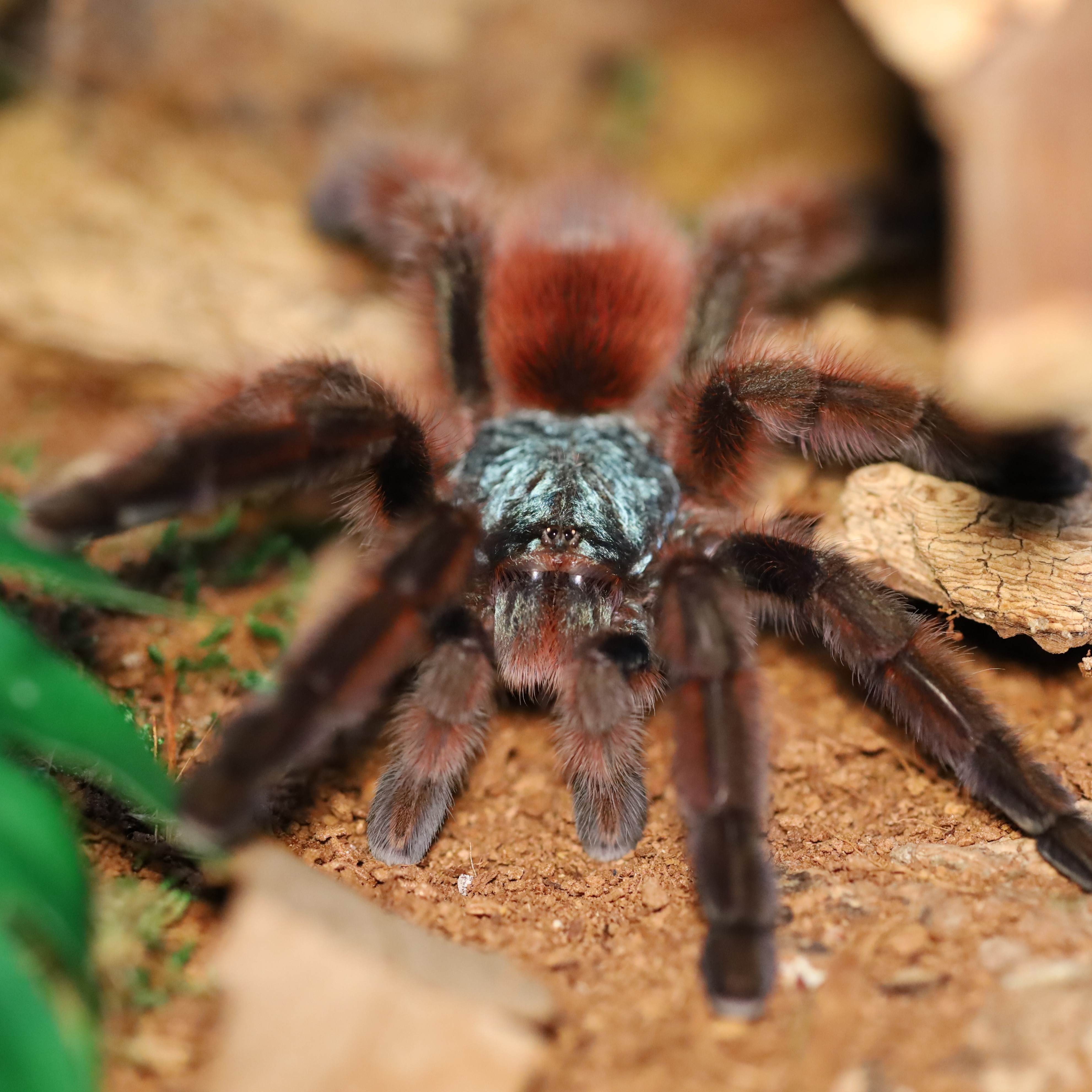
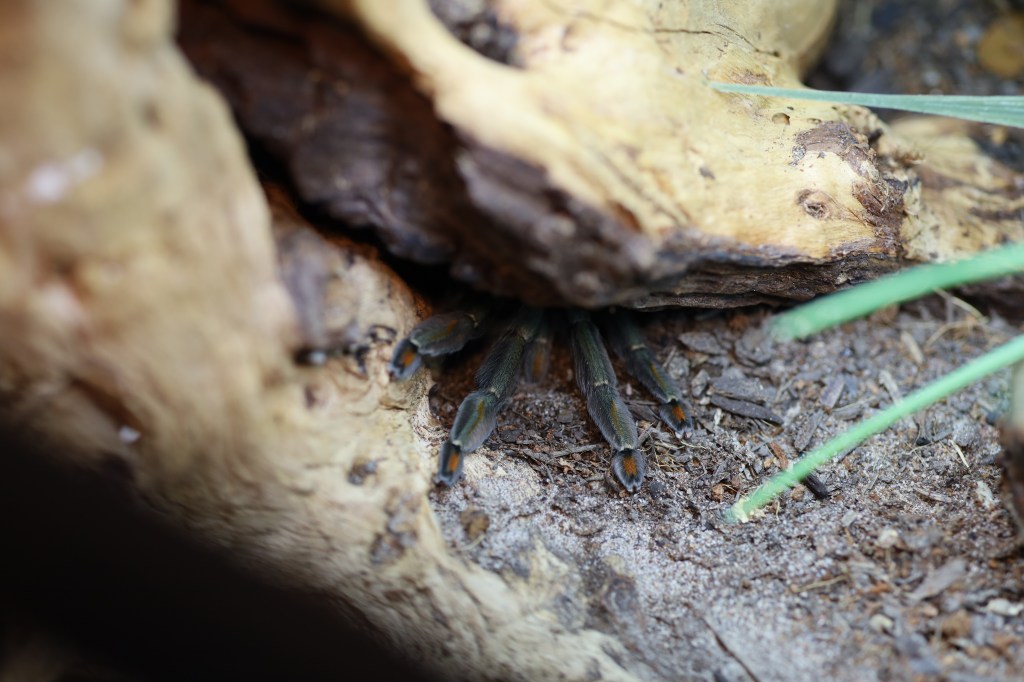
One aspect of tarantula care practices that I’ve always found extremely damaging to our way of thinking is how we as a whole divide all species under three terms: fossorial, terrestrial, and arboreal. Even if a species doesn’t quite fit, it gets placed in whichever category is the closest match.
These terms were never really intended to try and fully categorize an entire taxonomic group at the Family level. They’re broad-stroke, descriptive terms that can offer a way to group animals with similar characteristics and lifestyles. In the tarantula hobby though, they are often treated as all encompassing.
Arboreal and fossorial are only two of many different habitat specific lifestyles found among terrestrial animals. If you take a stroll through nature and really look around, you’ll discover a plethora of life that exists outside of these labels.
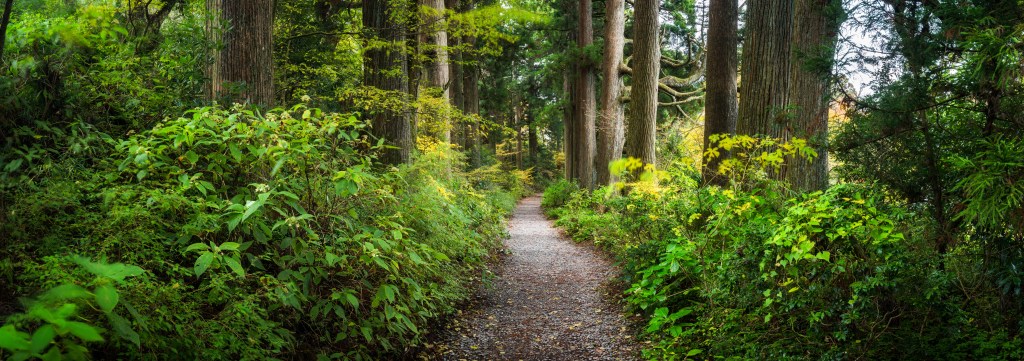
Above the ground-dwelling wildlife, but below the arboreal species you will find countless invertebrates that have evolved to live and hunt exclusively on specific species of flowers, or who thrive in leafy herbaceous plants. Others make their homes on woody shrubs, or thorny plants.
Many species have even more specific microhabitats. Take bromeliads for example. The leaf axils of these plants often form water reservoirs for aquatic life right alongside your terrestrial organisms living on the leaves and stems of the plant. Within a single leaf you may find organisms that largely inhabit the broad leafy surfaces and those who prefer to shelter deeper into the natural funnels created by the rosette leaf structures.
Even if we don’t get down quite that deeply, and just look at some general microhabitats, you’ll find so much variation. Among the ground-dwelling species that we group under the word ‘terrestrial’ in the tarantula hobby, you have species of invertebrates who live exclusively in rock crevices, leaf litter, sand, beneath rotting wood, at the base of plants, and so many more.
Among your arboreal species you’ll find just as many microhabitats. Some live high in the canopy, and others almost exclusively on trunks, beneath bark plates, and in hollows or cavities. Some are instinctively drawn to a specific structure type such as the junctions in branches. You’ll even find species that aren’t dependent on the trees themselves, but the lichen and moss that grows upon it.
Even fossorial species gravitate to specific microhabitats. Some species will instinctively dig burrows at the base of plants, others prefer open fields, the sides of hills, or beneath rocks. Even the composition of the soil matters to them, and many will seek out a location that their instincts tell them will provide the correct amount of stability.
And to add one final layer of complexity. Many species of wildlife don’t live exclusively in a single habitat zone. You’ll find species that live underground, but climb trees in search of food. Many species will instinctively use trees to escape predators, but may spend most of their time hunting or foraging on the ground. Some species live on land, but hunt in water. Other species will roam far and wide, traversing complex and varied terrains. Some will live, sleep and rear their young in burrows by day, only to emerge to hunt or forage at night.
So how does this relate to tarantula care? By fixating too heavily on three words, other habitat preferences have become almost completely unrecognized. Fortunately, most tarantula species are very adaptable and quite capable of adjusting to generic care practices shaped by simplified categories, but it also stagnates discovery. The more I have watched tarantulas, the more I have come to believe that these incomplete categories fall short for many species, and that we are inadvertently suppressing many natural instincts and behaviors.
Now, if your purpose in owning tarantulas is to provide it a safe home where it can grow, eat, reproduce, and live out a healthy lifespan, they are adaptable enough that how we have been keeping them for so long provides those things. But if you have that spark of wonder ‘is there more to this tarantula that I’m not seeing?’, I encourage you to think beyond these basic labels.
I personally started providing my tarantulas larger and more involved enclosures. Rather than sticking to traditional designs, I found myself offering floor space well in excess of common recommendations so that I could provide variations in terrain and décor. I wanted to observe how different species would interact with their environment and where they would choose to live within it if given choices. Early observations quickly reinforced my belief that these three categories were inadequate. They also fostered my belief that by sticking to them so strongly, people are missing out on so much of what makes each species unique.
Let’s take a quick look at a few species for example.
Psalmopoeus Cambridgei

Psalmopoeus cambridgei is a well-known arboreal species that is typically housed in Exo Terra style arboreal enclosures with minimal floor space, and a vertical retreat. Will they adapt and thrive? Most certainly. But what do we find if we look deeper.
In its native habitat of Trinidad, P. cambridgei often occupies regions of the forest that just don’t quite match the traditional design of arboreal enclosures. They are often found in tree hollows or natural crevices near the base of tree trunks, but are also commonly known to inhabit fallen logs, rotting tree stumps, or the undersides of exposed tree roots. Their adaptability also means that they can frequently be found seeking shelter on or around manmade structures, like fence posts, brick walls, discarded boxes, and PVC pipes.
Juveniles have been found roaming the forest floors, and mature females thought to be largely sedentary have been found not always returning to the same retreat location from day to day. In captivity P. cambridgei of all ages have been observed building molting chambers below their substrate level but are quick to retreat upwards through vertical escape routes.
These wild sightings, patterns of roaming behavior, and hobbyist observations suggest that they instinctively make use of elevated retreats, shallow burrows, and ground-dwelling hunting grounds. How many natural behaviors and instincts are we missing out on by placing P. cambridgei into a tree-dwelling niche of strictly arboreal rather than considering the possibility that this is a species that thrives in the in-between of both worlds rather than one that lives exclusively in one or the other.
Avicularia Minatrix
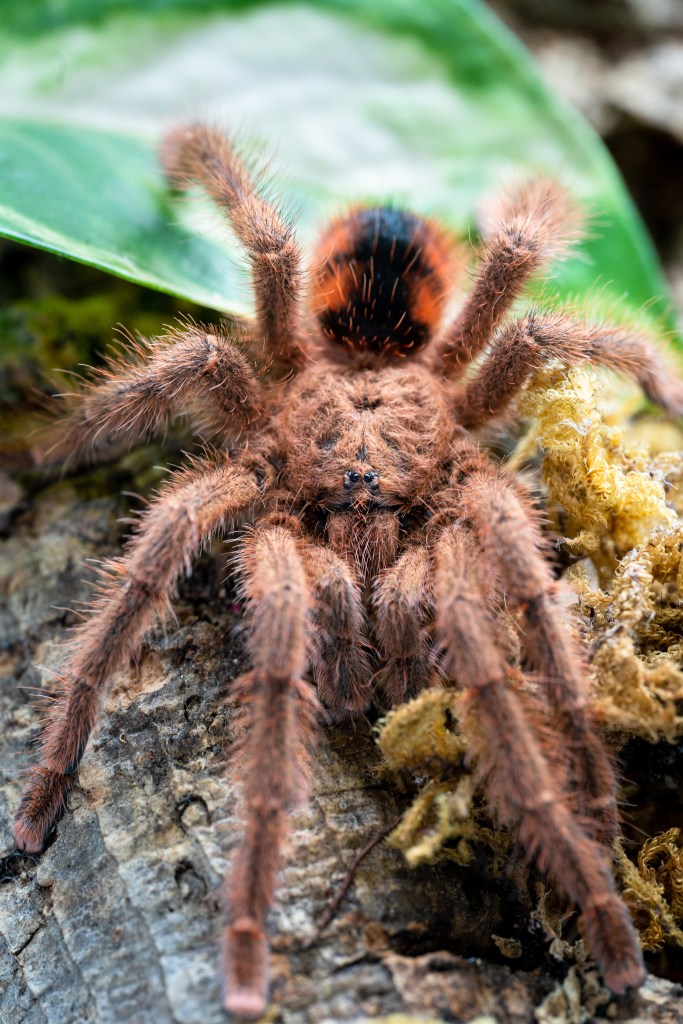
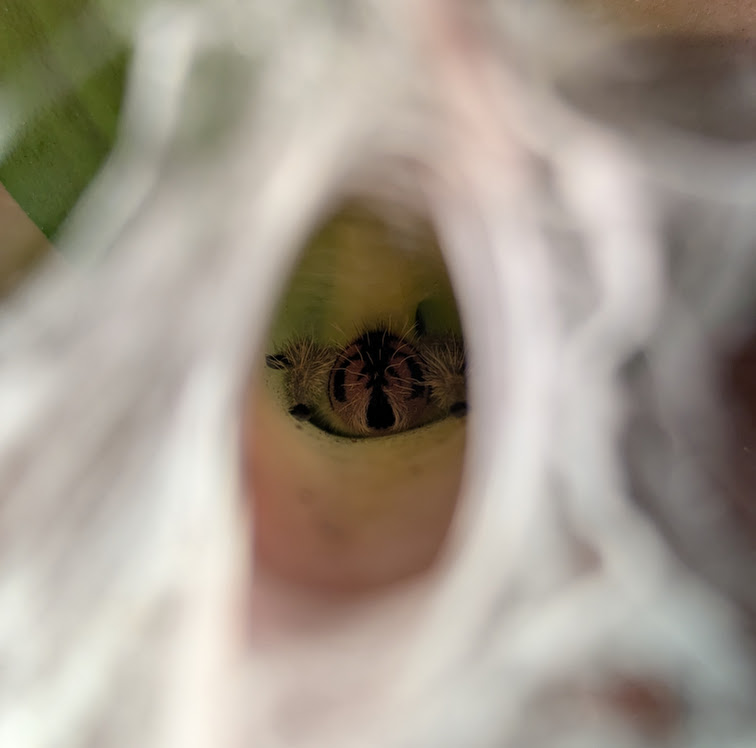
Another species that I’ve taken a personal interest in is Avicularia minatrix. This species of Avicularia will grow to only a fraction of the size of its fellow avics. Their natural environment could explain their diminutive size.
In the wild, A. minatrix are typically encountered on bromeliad plants. It is quite possible that this species spends the majority of its life on a single plant where its smaller size would enable it to make use of the natural funnel shapes created by the rosette growth pattern of bromeliads.
This raises the question of whether A. minatrix may have evolved to occupy a very specific ecological niche that relies on the leaf structures of bromeliads rather than trees? And if that is the case, what instinctive behaviors are being suppressed that may never present outside of the unique microhabitats found on a bromeliad. We will never know if we don’t break away from the ‘keep it like any other avic’ approach that is prevalent in the hobby.
Chromatopelma Cyaneopubescens
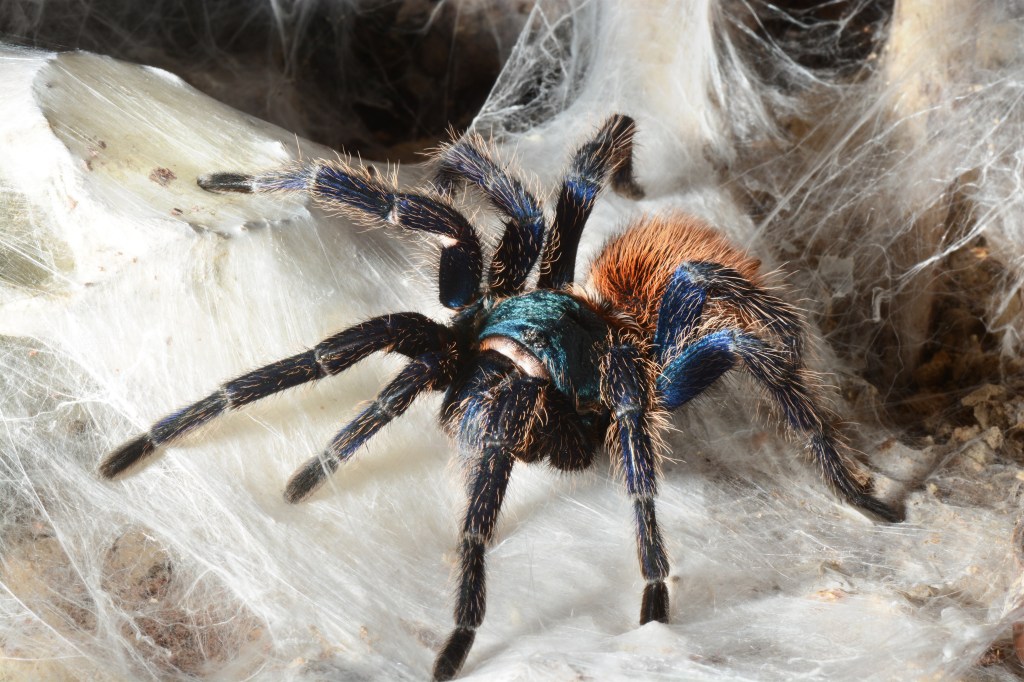
Chromatopelma cyaneopubescens is also worth mentioning. It is a very well-known species that is often caught between labels. There is, in fact, a heated and ongoing debate among hobbyists over whether this is a terrestrial or a semi-arboreal species. In the wild, this species inhabits the dry scrublands of northern Venezuela, where it weaves dense, sprawling webs near the base of cacti, scrub bushes, exposed roots, rocky outcrops, and yes, sometimes trees if that is all that is available. It readily creates its own terrain and web lined burrows and is frequently found within those earlier mentioned zones between the ground and low laying vegetation.
C. cyaneopubescens seems less concerned with height than with locating an architectural framework of fixed points that can support a suitable retreat. Height becomes incidental, when what seems to matter is the availability of suitable framework. It doesn’t care to adhere to terms such as terrestrial, arboreal, or semi-arboreal in its search of a suitable location.
The unique characteristics that set each of these species apart from basic labels is the heart of what Spider Odyssey seeks to explore. The species I’ve mentioned above can and do adapt and thrive quite well in generic enclosures, but every single species of tarantula also possesses a wide range of unique and highly specialized instincts that were shaped over the course of millions of years by the environments they evolved within. When we try to compress all that evolutionary nuance into three words, we risk missing out on so many unique instincts and traits that were simply never meant to fit into predefined boxes.
What behaviors are we overlooking, because we never provided an environment in which they could flourish? There’s so much to discover when we step away from what we think our tarantulas should be, and allow them to show us what they are.
Cautionary Note: While nature provides invaluable insight into understanding tarantulas, it’s important to remember that recreating it exactly in captivity isn’t possible. Trying to do so can be extremely dangerous.
Attempting to mimic exact environmental conditions in an enclosed environment can create fatal conditions. Attempting to replicate exact soil compositions inside of an enclosure can result in compaction that wouldn’t happen outdoors. Over time this can result in burrow instability and render your substrate more and more unusable as a suitable burrowing medium. Introducing natural elements of outdoor environments can easily introduce unnecessary dangers to an enclosure. Providing too much vertical space because they climb large objects in the wild can increase the risk of fall injuries in captivity where they have to navigate acrylic and glass walls with regularity.
We should draw inspiration from their natural habitats but not seek to recreate them in their entirety.
 Spider Odyssey
Leave a comment