Should you provide a water dish to your tarantula?
I personally advocate strongly in favor of always providing a water dish to your tarantula. My reasoning is quite simple: it is better to have it and not need it, than to need it and not have it.
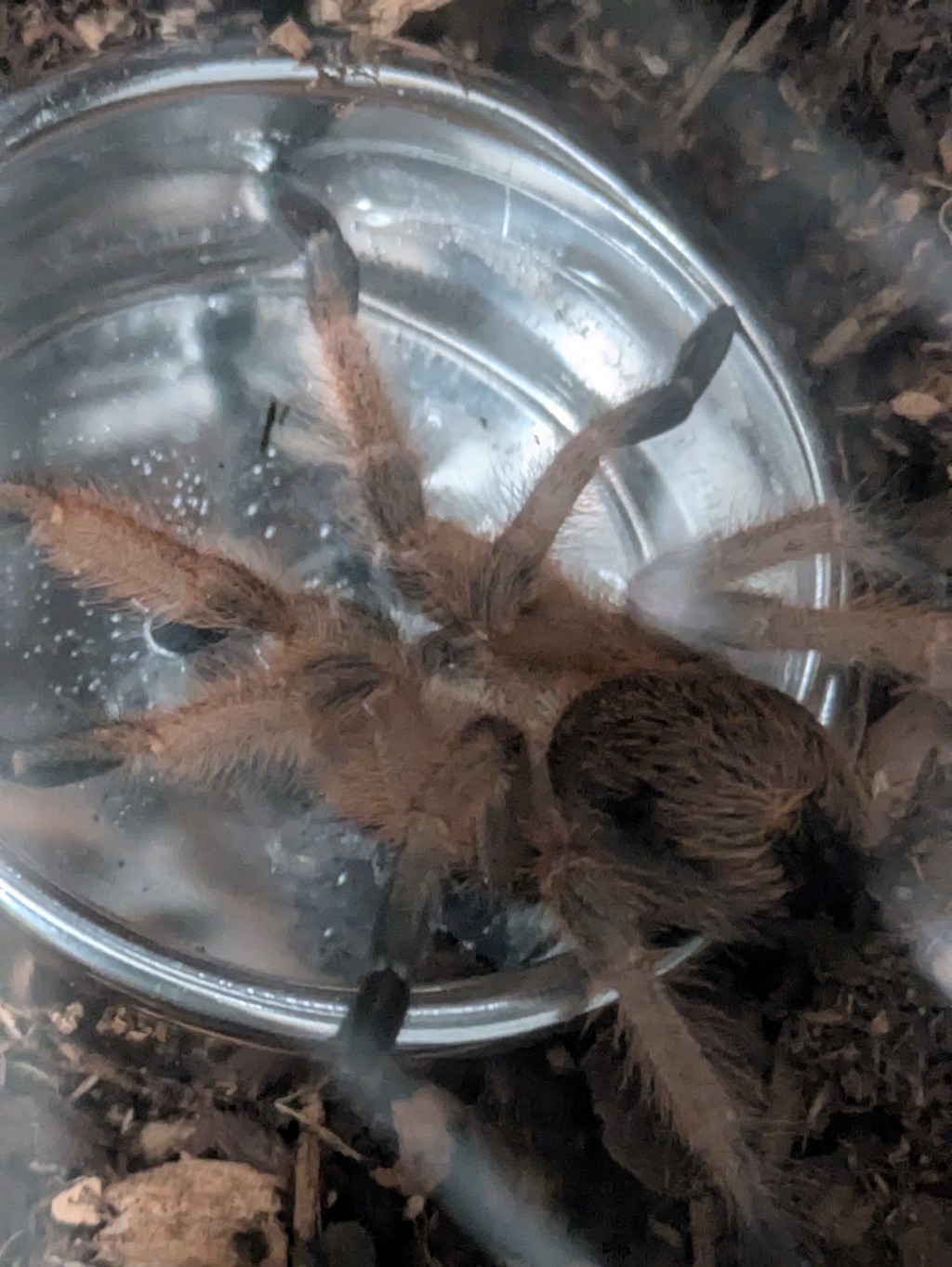
Tarantulas require hydration. While keepers sometimes mist, drip water onto webbing, or hydrate prey, a water dish is in my opinion the simplest and most reliable option for providing hydration. Unlike other methods, it enables your tarantula to seek out water when it needs it, rather than relying on us to anticipate the timing of its needs. It greatly reduces the risk of human error.
Tarantulas get much of their hydration from their prey, and you may find that they only visit their water dishes on occasion. But there are points of time where adequate hydration is extremely crucial. Prior to molting, a tarantula will typically hydrate heavily. If water is not available at that time, this can result in it sealing itself away to molt without the necessary hydration to ensure a safe molt.
Post molt a tarantula is very weak. They lose a substantial amount of fluids in the molting process, and a water dish is often the first thing they will seek out once they regain their strength.
If we make it a practice to always have a water dish available, we eliminate the risk of missing a crucial window.
Should you provide a water dish to slings?
I am an equally strong advocate for providing water dishes to slings. I personally provided a small cap of water to all of my slings as soon as I can fit one inside of an enclosure with them.

There is a prevalent fear of slings drowning that results in withholding water dishes, and I personally believe that this does a great deal of harm. Can a sling drown in its water dish? Technically, yes. Most any land-dwelling animal can drown under the correct circumstances, but in reality, it is extremely unlikely for a sling to drown.
Even the smallest of slings skim effortlessly across the surface of water. Their ability to float (even when on their backs) paired with being able to climb sheer surfaces means that healthy slings don’t simply drown in shallow caps of water. You can in fact easily locate video footage demonstrating their innate aptitude at not drowning.
It is my genuine belief that far more slings have died as a result of dehydration than from complications arising from water dishes. It is also my genuine belief that far more slings have died from overly damp enclosures caused by people being afraid that they will dehydrate, but being equally afraid to provide them a water dish.
Care practices driven by blind fear often introduce far greater dangers than those initially feared.
What about keepers who claim to have never used water dishes?
At the end of the day, what matters is that our tarantulas are kept healthy and safe. Tarantulas require hydration. Water dishes are simply one tool to provide it. Other methods can work with diligence, but they depend entirely on the keeper and carry a smaller margin for error. If those keepers have the ability to provide consistent hydration in other ways, then their tarantulas will thrive all the same.
The danger lies only in relying solely on ourselves for a tarantula’s day-to-day access to water. For me, this is simply an unnecessary risk when a water dish is a simple, safe, and effective solution to allow a tarantula to seek out what it needs, when it needs it.
 Spider Odyssey
Leave a comment