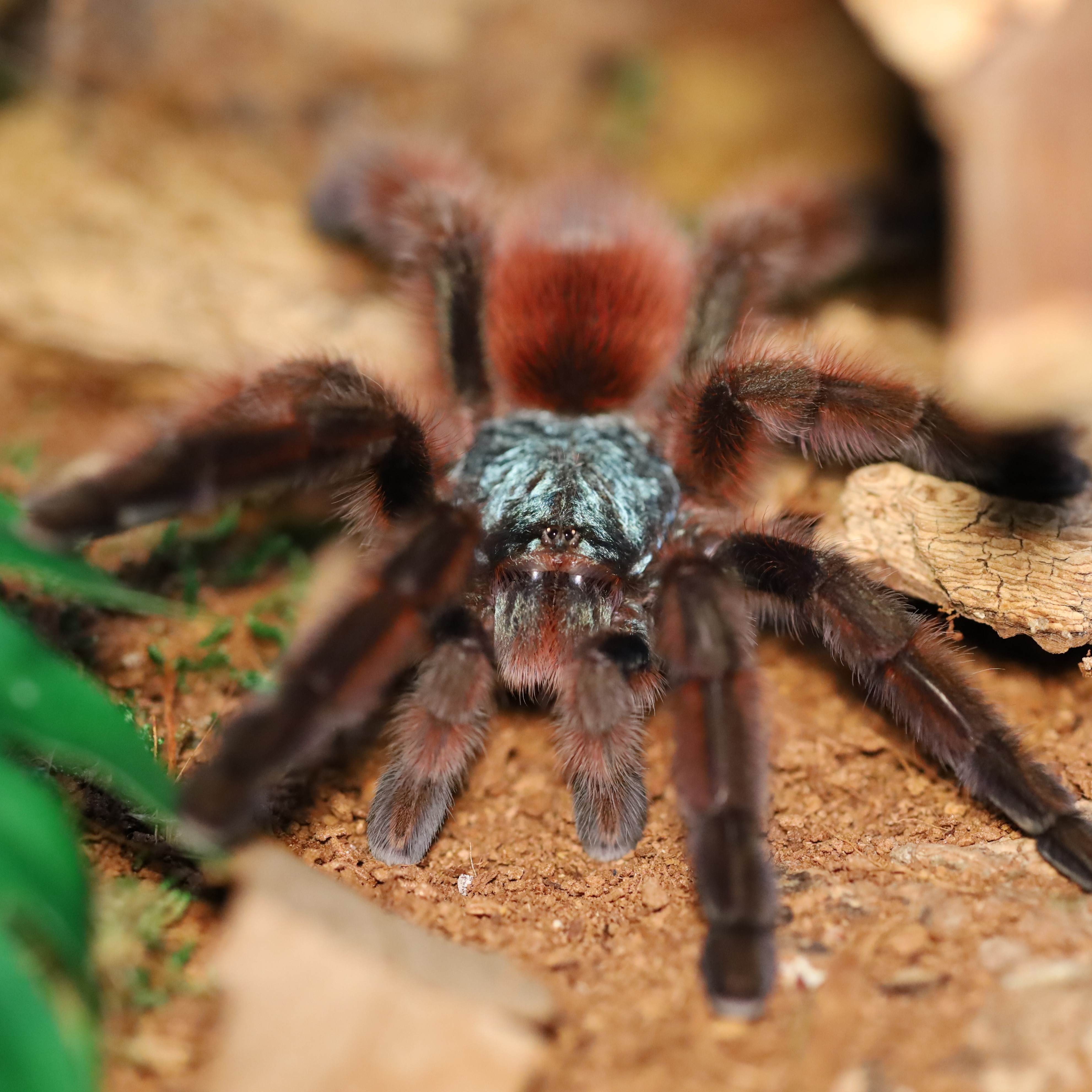
Overfed tarantulas are a common occurrence in the hobby, and one that many new keepers are entirely unaware when they are mistakenly contributing to it. Many have entered the hobby with little experience in arachnids outside of more commonly encountered true spiders they may have seen, such as various house spiders, cellar spiders, orb weavers, and widow spiders. Many species of true spiders have very large abdomens in relation to their carapace, giving them a bulbous look. People sometimes inadvertently assume tarantulas are supposed to look the same.
Others may come from a background in reptiles, amphibians, or even just common house pets where they are accustomed to feeding their pets on a set daily schedule, and where a lack of interest in food is seen as a sign that their pet is unwell. This can result in a concerned owner continuing to push food on their tarantula, worried that it will starve.
One thing that I’ve come across often is that when people report their tarantula being a picky eater, or needing to tong feed it to get it to take prey items, their tarantula appears to be very overfed. In many species, their feeding response will become very lackluster the more engorged they become. Unfortunately, as opportunistic predators, their instinct to eat when food is available is very strong. So keepers unaware of how full their tarantula is may keep placing food directly in front of it to encourage it to keep eating.
I wrote this to help people identify if they may be mistakenly overfeeding their tarantula, to recognize why it is dangerous, and to offer advice on what to do if it happens.
Why is it dangerous to overfeed your tarantula?
The most prominent danger that comes with overfeeding is that a heavily engorged tarantula is at a greater risk of abdominal injuries from falls. The larger your tarantula, the greater this risk becomes. Even small falls can result in a ruptured abdomen. They’re also at greater risk of taking falls, due to their heavier body mass.
Because tarantulas have such slow metabolisms, an overfed individual can remain engorged for many months, remaining at greater risk of injury during that time.
An overfed tarantula will also reduce its activity greatly. Some arid species will retreat into burrows and sustain off their stored reserves in a near dormant like state for a very long time. Often, they will not emerge again until after their next molt. This can easily leave you with a seemingly empty box for many months, or even upwards of a year in extreme cases. This can also increase their risk of molting complications from dehydration if they haven’t been venturing to the surface for water, or if they are instinctively waiting for seasonal cues that won’t come in captivity.
How can I tell if my tarantula is overweight?
Typically speaking (with the exception of slings, and gravid females), a tarantula’s abdomen shouldn’t be more than slightly wider than the carapace, or narrower than about half the width of the carapace. Generally as long as its body condition falls within that range, your tarantula is not being overfed or underfed.
Mature males will typically trend towards the leaner side of that range, regardless of how much you feed them. Mature females and juveniles of both sexes are more typically maintained at the mid to higher end of that range.
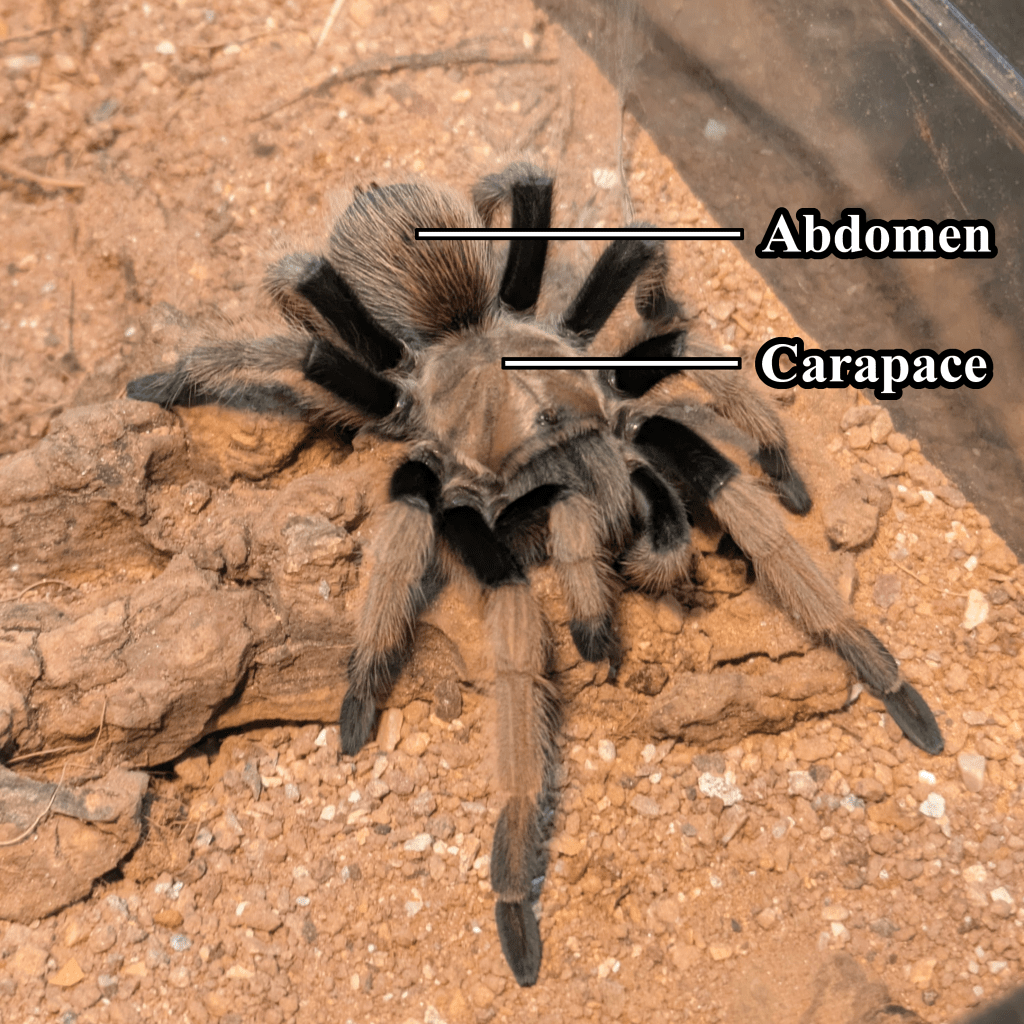
Note that some abdominal swelling during premolt is normal. This is when the abdomen appears to grow noticeably larger despite not being fed anything. This is caused by fluid buildup as it prepares to molt. If your tarantula was a healthy weight prior to this occurring, then this is not a sign that your tarantula is an unhealthy weight. Also note that it is normal for the abdomen to appear much smaller after molting as they use up a lot of fluids during the molting process.
What about slings?
Slings are an exception to these guidelines. Compared to their adult counterparts, slings grow and molt quite rapidly. This means you can’t really overfeed a sling the way you can an adult. They will simply stop eating, molt, and resume. Their small body mass, and habit of quickly molting means that the risks associated with an engorged adult are not in play.
I accidentally overfed my tarantula. What now?
Once a tarantula has become overfed, there’s not much that can be done but to wait. They have very slow metabolisms, and it will take time. They aren’t like mammals though that need to eat every day, regardless of how much they ate previously.
Tarantulas have extremely efficient metabolic function that requires almost no energy expenditure to maintain. This means that they can sustain off a single meal for a very long time without depleting their reserves.
So, if your tarantula is overweight, the solution is to simply stop feeding it until its body condition returns to normal. Always ensure they have access to fresh water though, especially during long periods of not eating.
This will not starve your tarantula, and in fact many species have adapted to a seasonal lifestyle in the wild. Their slow metabolisms allow them to eat heavily during optimal seasons so that they can hide away through harsher months without the need to emerge to hunt for food when conditions are less favorable.
In captivity where many people tend to keep them cooler, and where they don’t have seasonal cues, this period of inactivity can endure for many months. If you do keep your tarantulas at cooler temperatures, one thing you can consider is to increase the room temperature by a few degrees. Temperatures in the low 80s will noticeably increase their metabolism, and may help your tarantula return to a healthy weight more quickly.
How much should I feed my tarantula?
Check out our feeding guide if you need some tips on what, when, and how much to feed your tarantula.
 Spider Odyssey
Leave a comment