There are two things you will encounter often in tarantula care (or any pet care, really). One is the mentality of “It hasn’t happened to me, therefore the danger isn’t real,” and the other is “It happened to me, therefore it will happen to everyone.”
People will often be more heavily influenced by a single firsthand experience than more wide-spread data. Essentially, those not affected by something will be biased towards underestimating the danger they avoided, and those that are affected will be biased towards overestimating the danger they encountered.
This makes it difficult to engage in risk assessment. That means determining whether a danger is real, how likely it is, how severe the consequences would be if it did happen, whether the risk is necessary or unnecessary, and whether the benefits of a solution outweigh any dangers it introduces.
That’s why one of my goals with Spider Odyssey isn’t to tell people what is right or wrong, but to show how I personally do things, explain why I do them the way I do, and to encourage others to think critically.
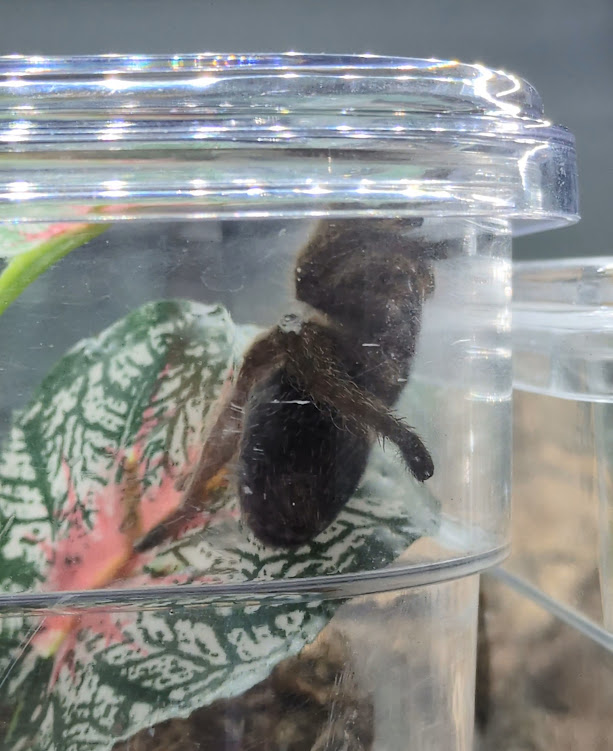
I took this picture this morning because it is a great example of the value of risk assessment and what sparked me to write this. It’s admittedly not the best picture, as I needed to get my son to school at the time, but this juvenile G. Pulchra was systematically working his way around the edge of his enclosure, pushing against the lid and feeling for gaps. It wasn’t because he wanted to escape, but because I had mistakenly left a container of darkling beetles on the shelf above him, and they were scuttling around up there. He simply wanted to reach them.
Prior to this morning, I had personally never witnessed a tarantula attempt to lift the lid off their enclosure (let alone in such a systematic way). But I could certainly acknowledge that a large tarantula is absolutely capable of doing so, and recognize the possibility as legitimate. And because the solution (securing lids) is not harmful to a tarantula, I have always done so with older individuals. The risk of one trying to get out is probably quite low, but the risk of it being harmed if one did get out is very high. The solution is simple and non-harmful, so it is an easy decision to make.
But where things get muddied up is when the solution itself introduces risks, or when the severity of a danger is uncertain. That’s when we need to stop and ask: are we are introducing a greater risk, out of fear of a rare one? Take water dishes for example. Many people remain fearful of providing their young slings with water dishes because they are afraid that a sling might fall in and drown. But the dangers imposed by not providing a water dish need to be considered as well.
It is my personal belief that dehydration related complications is probably one of the leading causes of deaths in slings (along with oversaturating their enclosures out of fear of dehydration and causing stagnant conditions). I genuinely believe that the dangers introduced by withholding water dishes are far greater than the likelihood of a healthy sling drowning in one.
You can find ample video footage showing how adept tarantula slings are at not drowning. They float, scuttle effortlessly across water, and even when caught on their backs, they are able to paddle to an edge and climb out. Their respiratory system is so efficient that, to drown, they would need to remain submerged for an extended period, despite being able to climb surfaces even when underwater. This means that anecdotal reports of slings being found dead in their water dishes aren’t likely due to them drowning in a shallow cap of water. More likely, it was simply the last place an already dying sling instinctively sought out. Without knowing for certain what caused those deaths, we need to consider if we are introducing greater dangers out of fear of rare and unclear anecdotal reports.
So when considering tarantula care, take the time to stop and ask yourself:
Is there potential for danger?
If so, how common is this danger?
What are the consequences of that danger?
What are the solutions?
Do those solutions introduce new dangers?
Are those new dangers greater than the original?
When we act blindly out of fear or personal bias, we do more harm than we prevent.
 Spider Odyssey
Leave a comment